Pathe Freres’ 1901, two minute spectacle, Peeping Tom is an early work of cinema that situates itself perfectly, and overtly, within the Gunning realm of attraction. The film exudes in unflinching reflexivity from the very onset as the spectator is presented with the self-aware exhibitionist guiding us through the most intimate of spaces. Voyeurism isContinue reading “Peeping Tom: The Acknowledged Voyeur”
Category Archives: Uncategorized
Rum Punch to Jackie Brown
Elmore Leonard’s 1992 crime-fiction novel, Rum Punch, is instituted as a masterful framework for Quentin Tarantino’s film adaptation, appropriately re-titled Jackie Brown. However, an analytical view of the two works reveals many stark, contrasting elements that become analogous with and reveal the workings of a true film auteur. Though the screen version borrows heavily fromContinue reading “Rum Punch to Jackie Brown”
“The Ever Amalgamating Cinema:” Tsui Hark and Peking Opera Blues
It has been argued that Tsui Hark “epitomizes the lost promise of the New Wave,” as it relates to Hong Kong Cinema, but to imagine an Asian film market without his pragmatic and fervent compositions would leave an insatiable void. Brooding in excess, extremes, and Hollywood appropriations, Tsui almost single handedly transformed his nations NewContinue reading ““The Ever Amalgamating Cinema:” Tsui Hark and Peking Opera Blues”
The Perfect Illusion: Bicycle Thieves as Pure Cinema
The end of the Second World War brought about a conflicting cultural, social, and political renaissance to every civilized part of our planet. While the United States progressed towards a period of substantial economic boom other countries were left to pick up the pieces, trying to reconstruct disheveled economies and shattered spirits. Cinema, as weContinue reading “The Perfect Illusion: Bicycle Thieves as Pure Cinema”
Freed by Allegorical Infection: The Devouring Consumerism of Zombieland
Ruben Fleischer’s Zombieland appears not coincidentally in a time when America is plagued by a recessive economy and battling a seemingly insurmountable debt. The film is littered with verifiable allegories of a crumbling capitalist, consumer culture that aim to satirically awaken the spectator to the decaying vacuous nature of modern society. It manages to presentContinue reading “Freed by Allegorical Infection: The Devouring Consumerism of Zombieland”
“To Love is to Live:” Allegorical relationships in Woody Allen’s Sweet & Lowdown
The perplexing art/ life dichotomy manifested in the work of Woody Allen is continually revisited with complex and often paradoxical results. Sweet and Lowdown (1999) is certainly no exception. The film’s narrative/ documentary hybridization focuses on little-known jazz guitarist Emmet Ray (Sean Penn) and his relationships with two different women- Hattie and Blanche. These charactersContinue reading ““To Love is to Live:” Allegorical relationships in Woody Allen’s Sweet & Lowdown”
Vivre Sa Vie: The Metaphysical Realm of Tableaux Twelve
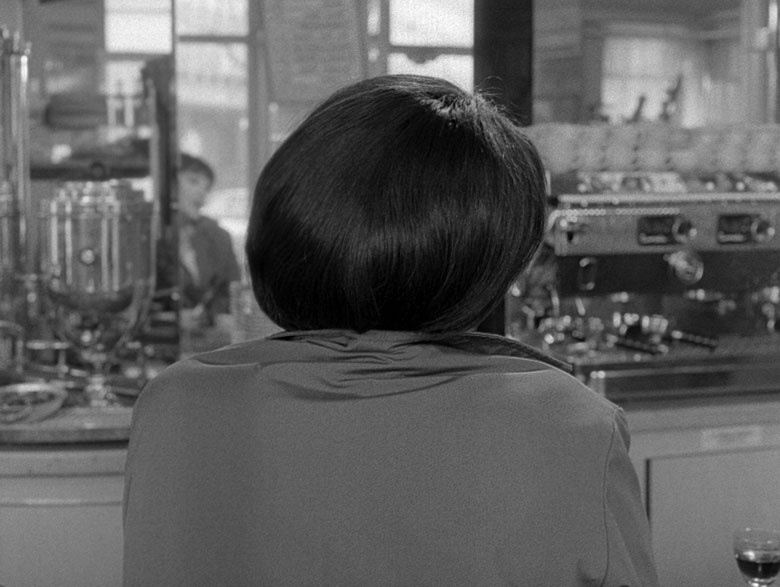
Following D.W. Griffith’s 1915 groundbreaking feature Birth of a Nation world cinema, in large part, became confined to certain conventions, seeming to skew itself into mindless entertainment. During World War II the industry had been misshapen by an infectious formula littered with political propaganda and fantasized realities. The years preceding the end of the warContinue reading “Vivre Sa Vie: The Metaphysical Realm of Tableaux Twelve”
“21st Century Distractions for Capital’s Golden Child: ” America’s prefigured contrivance of coalesced art and news media in the work of Walter Benjamin
The first few decades of the 19th century brought about the emergence of modern photographic processes that augmented reproduction innovation first made viable by the lithograph. Inevitably- precipitated in its powers of mass assemblage only by newsprint- came the advent of filmmaking. Possibilities of a new cohesive culture placed an incredible emphasis on “exhibition value”Continue reading ““21st Century Distractions for Capital’s Golden Child: ” America’s prefigured contrivance of coalesced art and news media in the work of Walter Benjamin”
“Who Needs Conventions?:” Blow-Up’s existential departure from classical Hollywood narrative
Michelangelo Antonioni’s first English language film Blow-Up (1966) is a definitive piece of work that pushed the boundaries of cinematic sexuality and diverged significantly from conventions of the classical Hollywood narrative. Thomas (David Hemmings) wanders through his day as a prestigious London Fashion photographer until he stumbles upon and accidentally photographs what he comes toContinue reading ““Who Needs Conventions?:” Blow-Up’s existential departure from classical Hollywood narrative”
Godard to Wong: An Examination of Influence and Independence within Chungking Express
Every piece of art is grounded and conceived as a result of predating influence and inspiration- cinema is no exception. The Lumiere brothers were inspired by photography, by painting, and immensely through properties of their environmental surroundings. As film began to evolve from simply a new technology into an artistic facilitator, and eventually a superlativeContinue reading “Godard to Wong: An Examination of Influence and Independence within Chungking Express”
 Fourth Wall Writing